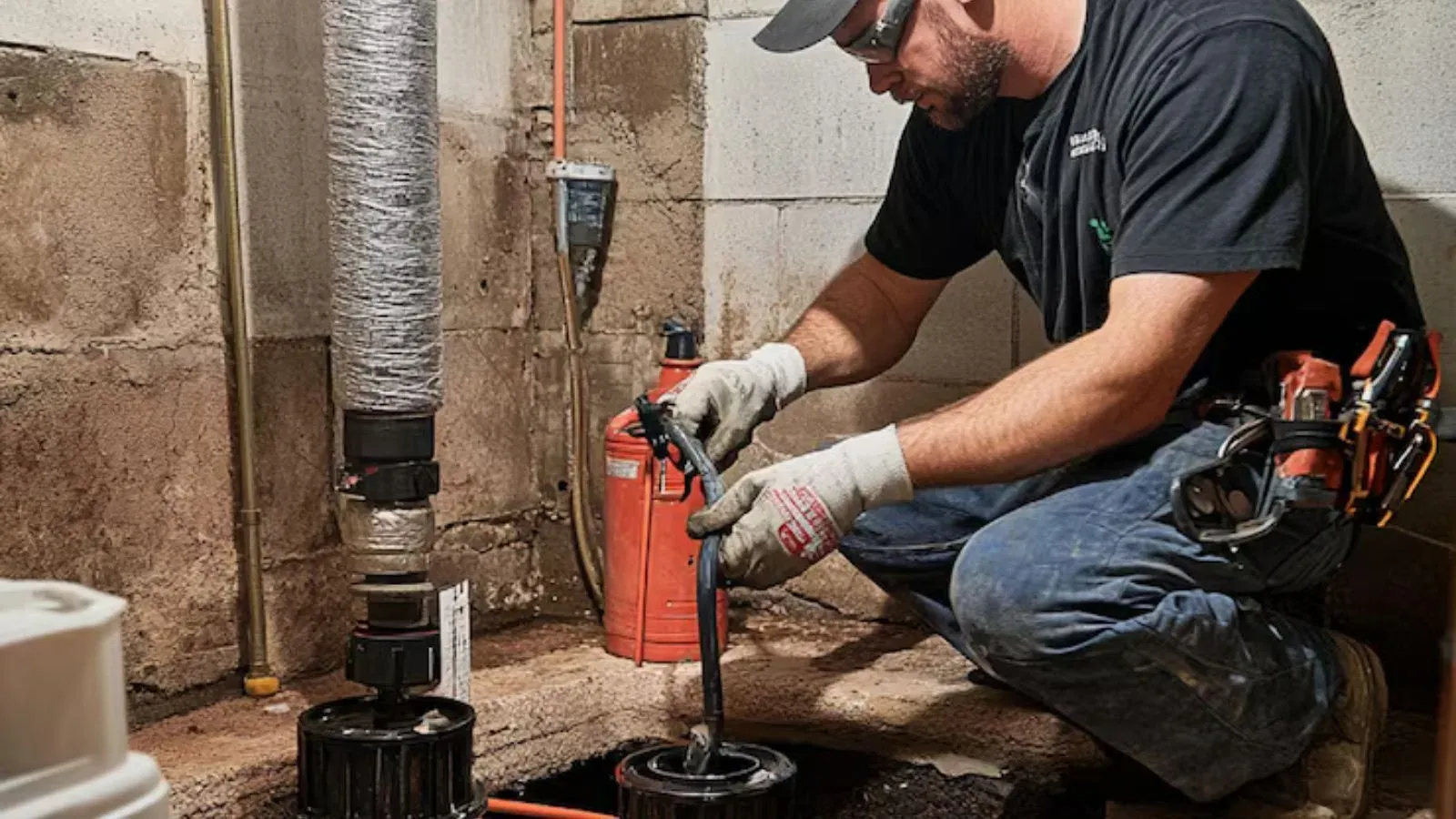
A basement that gets damp, smells musty or shows water along the wall is telling you something about drainage, and the cause is not always the one people assume. We handle basement waterproofing in Palisades Park, NJ from the plumbing side, which means interior drains, sump pits and the pipes that carry water away. Our first job is to find the source, not to sell a system.
Waterproofing means keeping groundwater out of a basement or giving it a controlled path to leave. In an existing home, the usual tools are an interior drain channel, a sump pit with a pump, and repairs at cracks and joints.
Why is my basement wet? Start with the symptom
Where and when water shows up tells us a great deal. The technical name for the fix depends on which of these you see.
Dampness along the wall-floor joint
Water pushed up from the ground often shows at the joint where the floor meets the wall.
A crack that weeps after rain
A single crack is a point of entry and may be sealed or drained.
Puddles after storms only
Surface drainage, gutters and grading often matter more than anything inside.
Constant damp and a musty smell
Humidity and condensation can mimic a leak. A dehumidifier test helps separate the two.
Water near a pipe or fixture
A leaking supply line, water heater or drain can look like a wall problem.
Cracks versus hydrostatic pressure
Hydrostatic pressure is the force of groundwater pressing against a foundation. When soil is saturated, that water finds the weakest path in, often a crack, a cold joint or the gap around a pipe that passes through the wall. Sealing one crack from the inside does not reduce the pressure, and the water can show up somewhere else.
That is why a crack repair alone is not always the answer. A drain along the floor edge collects water that gets in and sends it to a sump pit, so the pressure has somewhere to go. We explain which approach fits the evidence.
Need a plumber now?
Call the 24/7 line and describe the problem. We book the next available appointment.
How we diagnose a wet basement
We work from the least invasive checks to the most.
- 1
Look outside first
Downspouts, gutters, grading and window wells are common sources that cost little to fix.
- 2
Check interior plumbing
We test supply lines, the water heater area, the washer connections and floor drains for leaks.
- 3
Map the moisture
A moisture meter shows how far dampness extends along a wall or floor.
- 4
Watch the water
We note whether it appears after rain, after laundry, or all the time.
- 5
Recommend only what fits
If a small repair solves it, we say so. If the basement needs a drain system, we explain why.
Interior drain systems and sump tie-in
An interior drain system sits in a channel cut along the inside edge of the basement floor. Water that comes through the wall or the joint drops into the channel and flows by gravity to a sump pit, where a pump sends it outside. The floor is then patched with concrete.
The pump is the part that fails during storms and outages, so we pair the drain with a reliable pump and discuss a backup. Our sump pump service page covers repair, replacement and battery options in detail.
Options and what each can and cannot do
No single fix suits every basement. This table lays out the common choices.
| Option | What it does | Limit |
|---|---|---|
| Gutter and downspout fix | Moves roof water away from the foundation | Does not help with rising groundwater |
| Crack sealing | Closes a single entry point | Water may find another path |
| Interior drain with sump | Collects water at the floor edge and pumps it out | Needs power or backup, and floor work |
| Sump pump replacement | Restores pumping for an existing pit | Does not manage wall seepage |
| Fixing a plumbing leak | Stops water that is not groundwater | Only applies when a pipe is the source |
If we find a hidden pipe leak, leak detection is the next step.
Regional flooding context, and what it does not mean
Neighboring Ridgefield sits about 10 feet above sea level in the Hackensack River flood plain, which shows how much low ground and groundwater vary across this part of Bergen County. We do not say that Palisades Park basements are flood prone. Your house, your lot and your drainage decide that.
Planning the work
Waterproofing is a planned project, not an emergency, so scheduling is flexible. If a basement is actively taking on water, call the 24/7 line and ask for help first. We can address the immediate problem and then plan a longer fix.
Permit rules vary, so ask the Palisades Park Building Department about your job. Permit fees for plumbing are based on the number of fixtures and appliances, and a final inspection is required. Plumbing work in New Jersey must be done by licensed master plumbers, authorized plumbing contractors or their W-2 employees.
What affects the price of basement waterproofing
Costs depend on the source of the water and the size of the system. You get a clear price before work starts.
Diagnosis result
A gutter fix and a full drain system are very different jobs.
Length of interior drain
More perimeter means more concrete cutting, pipe and patching.
Sump pit and pump
A new pit, a larger pump or a battery backup adds equipment and labor.
Floor finish and access
Finished floors and tight spaces slow the work.
Repairs to cracks or pipes
Sealing or plumbing repairs are priced separately from the drain system.
Homeowner's insurance often excludes groundwater seepage, so check your policy before assuming coverage. We cannot say your exact cost before seeing the basement. Want your real number? Call the 24/7 line.
Common Questions
Not necessarily. Damp walls can come from condensation, humid air or a small leak. We check the plumbing and the surface drainage first. If groundwater is the cause, we explain the options.
Interior drain systems work from inside and manage water that gets in. They do not stop water from touching the outside of the wall. For many homes that is an acceptable trade-off.
Only if water reaches the pit. Without a drain or a natural low point leading to it, the pump has little to pump. We look at the whole path.
Plumbing leaks usually appear near pipes, fixtures or the water heater and can occur without rain. Groundwater tends to show along walls and joints after wet weather. We test both.
No. Gutters, grading, a failed pump or a plumbing leak often explain the water. We recommend a system only if the evidence calls for one.
That depends on how dry it stays and how the work is done. A dry basement is a better starting point, but we recommend watching it through a few wet seasons before finishing.
Licensing and permits
Under New Jersey plumbing licensing standards, plumbing work is limited to licensed master plumbers, authorized plumbing contractors and their employees. You can check any plumber through the NJ Division of Consumer Affairs, State Board of Examiners of Master Plumbers. Palisades Park also publishes permit and inspection details on the borough website.