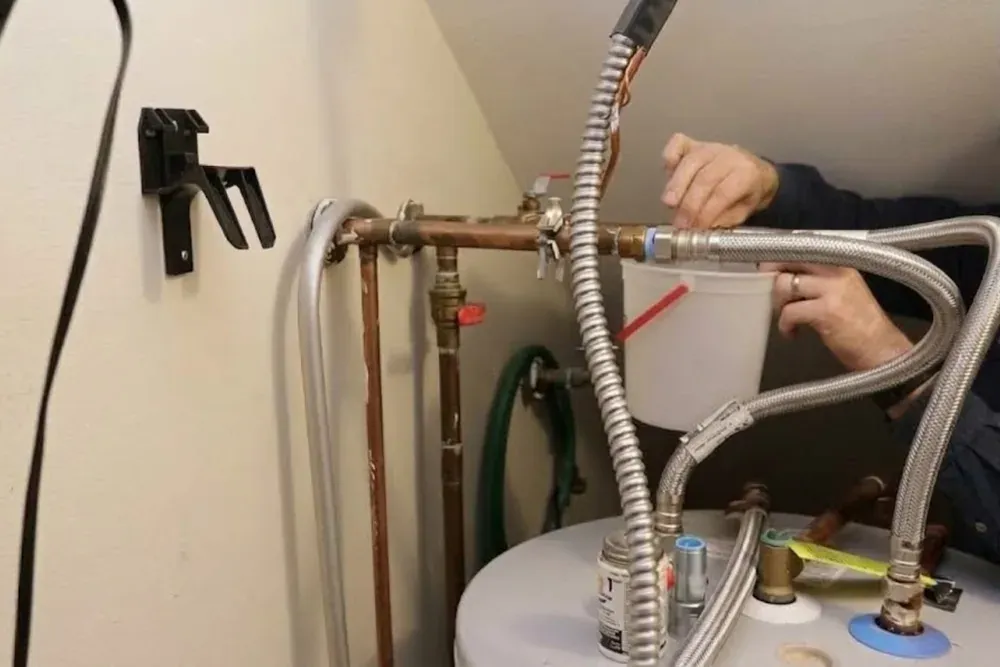
A leaking or dead water heater in Palisades Park, NJ is a problem you feel right away, either as water on the floor or a cold shower. Emergency water heater repair means finding the failed part, such as a heating element, thermostat, gas valve or fitting, and fixing it so the unit runs safely again. Our 24/7 emergency dispatch covers nights and weekends.
While you wait, shut the cold water supply valve on top of the tank, turn the power off at the breaker for an electric unit, or turn the gas control to off for a gas unit. Keep people and pets away from any standing water near wiring.
When a leaking water heater is an emergency
Not every drip is a disaster, but a tank that is actively leaking is. Water from the tank body itself usually means the steel liner has corroded through, and that cannot be patched. Water from a pipe fitting, the drain valve or the temperature and pressure relief valve is often fixable.
Look closely before you decide. Dry the area with a towel, then check where the new water appears. If it comes from the top, the inlet and outlet connections are the first suspects. If it comes from the bottom edge of the jacket, the tank may be done.
If water is spreading toward finished flooring, a furnace or an electrical panel, treat it as an emergency water heater repair call and phone the 24/7 line right away. We offer same-day appointments when available, and after-hours dispatch for active leaks. In a Palisades Park basement, where many homes have the heater near a floor drain or sump, a slow leak can run unnoticed for days.
Signs your water heater needs attention
Most failures announce themselves first. These are the signals we hear about most, and each points toward a different part.
Water around the base
Check the fittings, the drain valve and the relief valve discharge pipe before blaming the tank. A leak from the shell itself means replacement.
Lukewarm or no hot water
On electric units a burned-out element or tripped high-limit switch is common. On gas units look for a pilot that will not stay lit.
Rumbling or popping from the tank
Mineral sediment on the bottom traps steam bubbles as the burner or element heats. That sound is the tank telling you it needs flushing.
Rusty or brown hot water
If only the hot side runs rusty, the inside of the tank or a spent anode rod may be the source. Cold water that runs clear points away from the pipes.
Rotten egg smell from hot taps
A reaction between the anode rod and bacteria in the tank can cause it. We can often fix it by changing the rod and flushing the tank.
Need a plumber now?
Call the 24/7 line and describe the problem. We book the next available appointment.
Why hard water is hard on tanks here
The Veolia Water New Jersey 2025 water quality report lists hardness in the Hackensack system at 210 ppm as calcium carbonate, which the report classes as very hard. Hardness is dissolved calcium and magnesium, and heating water makes those minerals drop out as scale and sediment.
In a tank, that material settles on the bottom, insulates the water from the burner or element, and makes the heater work harder to deliver the same temperature. That is why a water heater in Palisades Park can start rumbling or running out of hot water sooner than the same model in a soft-water town. We do not put a number of years on it, because usage and installation matter too.
The practical answer is maintenance. Draining some water from the tank, checking the anode rod and testing the relief valve once a year keep sediment from piling up. If you have never flushed your tank, call and we will tell you honestly whether it is worth doing or whether the unit is past that point.
The anode rod and sediment: the two parts people forget
Inside every steel tank water heater is an anode rod, usually magnesium or aluminum. It is designed to corrode first so the tank wall does not. Once the rod is eaten away, the steel is next, which is why checking it is cheap insurance against a leak.
Sediment is the other half of the story. A thick layer on the bottom can clog the drain valve, so a flush that should take minutes becomes a repair job. If the rod is gone and the tank is badly caked, we will say so and explain whether a repair is worth the money or a new tank makes more sense. Our notes on replacing a failed tank cover that decision in more detail.
Repair differences for gas, electric and hybrid units
The failed part depends on how your heater makes heat. Here is what we check first on each type.
| Heater type | Common failures | What we check |
|---|---|---|
| Gas tank | Pilot or thermocouple, gas control valve, venting | Flame behavior, draft at the flue, gas control response |
| Electric tank | Upper or lower heating element, thermostat, high-limit switch | Power at the terminals, element resistance, wiring condition |
| Hybrid (heat pump) tank | Air filter, condensate drain, fan, backup element | Error code, airflow, condensate path, element function |
Gas appliances carry extra risk. If you smell gas at any point, leave the building and call the gas utility or 911 before you call us.
No hot water: what usually causes it
A cold shower can come from a simple fault. A tripped breaker, a pilot that blew out, or a single failed element can leave the tank running cold. We start with power and fuel, then the control parts, and only then talk about the tank.
If your house shares a heater between a kitchen and bathrooms, check that other taps are also cold before you call. That tells us whether the problem is the heater or one fixture's mixing valve.
How we diagnose the problem
We follow the same order on every call so nothing gets skipped.
- 1
Make it safe
We shut off power or gas, close the supply valve and contain any water before touching parts.
- 2
Test, do not guess
A multimeter checks elements and thermostats on electric units. For gas units we look at flame quality and flue draft.
- 3
Inspect the tank and fittings
We check the base, the relief valve, the anode condition and the expansion situation on the supply side.
- 4
Explain your options
You hear what failed, what repair costs in plain terms, and whether replacement is the better choice. The price is clear before work starts.
Repair or replace: honest trade-offs
A simple part failure on a tank that is otherwise sound is usually worth repairing. A leaking shell, heavy corrosion or repeated failures point toward replacement. We will not push a new unit when a thermostat will do the job.
If you are weighing a change of fuel or a heat pump model, our team can walk through the installation options once the immediate problem is handled. Landlords and managers can also ask us about multi-unit buildings, since a shared heater affects every tenant.
Serving Palisades Park from Broad Avenue
Our office is at 325 Broad Ave, in the central business district that runs through the borough, so crews know the streets. Palisades Park has about 7,668 housing units in roughly 1.25 square miles, and many are older homes and two-family buildings with water heaters in basements or utility closets. Tight spaces mean we plan access and venting before we start.
If a repair needs a permit, the borough building department sets fees by the number of fixtures or appliances, and an emergency repair permit must be obtained within 72 hours of the work. Permit rules vary, so ask the Palisades Park Building Department. We also work in nearby Fort Lee and Ridgefield.
What affects the price of water heater repair
Repairs range from a quick part swap to a major fix, so the number depends on what we find.
Which part failed
An element or thermostat is a different job from a gas control valve or a leaking fitting.
Fuel type and model
Gas, electric and hybrid units use different parts, and some models need manufacturer-specific components.
Access and location
A heater in a cramped closet or low basement corner takes longer to service than one with open clearance.
Condition of the tank
Heavy sediment or a spent anode rod can add steps like flushing or rod replacement.
Time of the call
After-hours and weekend dispatch can carry different terms than a scheduled visit.
Homeowner policies sometimes cover sudden water damage but not wear on the heater itself, so check with your insurer. We cannot say your exact cost before seeing the job. Want your real number? Call the 24/7 line.
Common Questions
Yes. The 24/7 line connects you to emergency dispatch around the clock, including weekends and holidays. Active leaks and no-heat situations get priority. We cannot promise an exact arrival time, but we will tell you what to do while a technician is on the way.
If the leak is from a fitting, valve or connection, often yes. If water is escaping through the tank wall, the steel liner has failed and the unit must be replaced. We check the source before recommending anything.
Sediment on the bottom of the tank traps water that boils into steam pockets, and the bubbles make the noise. Hard water speeds that buildup. A flush often helps if the drain valve is clear, but a heavily caked tank may be near the end of its useful life.
It is a sacrificial metal rod inside the tank that corrodes so the steel does not. Checking it is quick. If it is mostly consumed, replacing it is usually far less costly than a new tank.
Often, but check the breaker first. A heater has an upper and lower element plus thermostats and a high-limit reset. We test each with a meter so you are not paying for a part that was fine.
The Veolia 2025 report lists hardness at 210 ppm as calcium carbonate, which it calls very hard. That means scale and sediment form faster in heaters. We do not diagnose health effects of water, only how it affects your equipment.
Call the 24/7 line and tell us the address and whether the heater is shared. Landlords and property managers get the problem and options explained clearly, and we can coordinate access with tenants.
Licensing and permits
Under New Jersey plumbing licensing standards, plumbing work is limited to licensed master plumbers, authorized plumbing contractors and their employees. You can check any plumber through the NJ Division of Consumer Affairs, State Board of Examiners of Master Plumbers. Palisades Park also publishes permit and inspection details on the borough website.