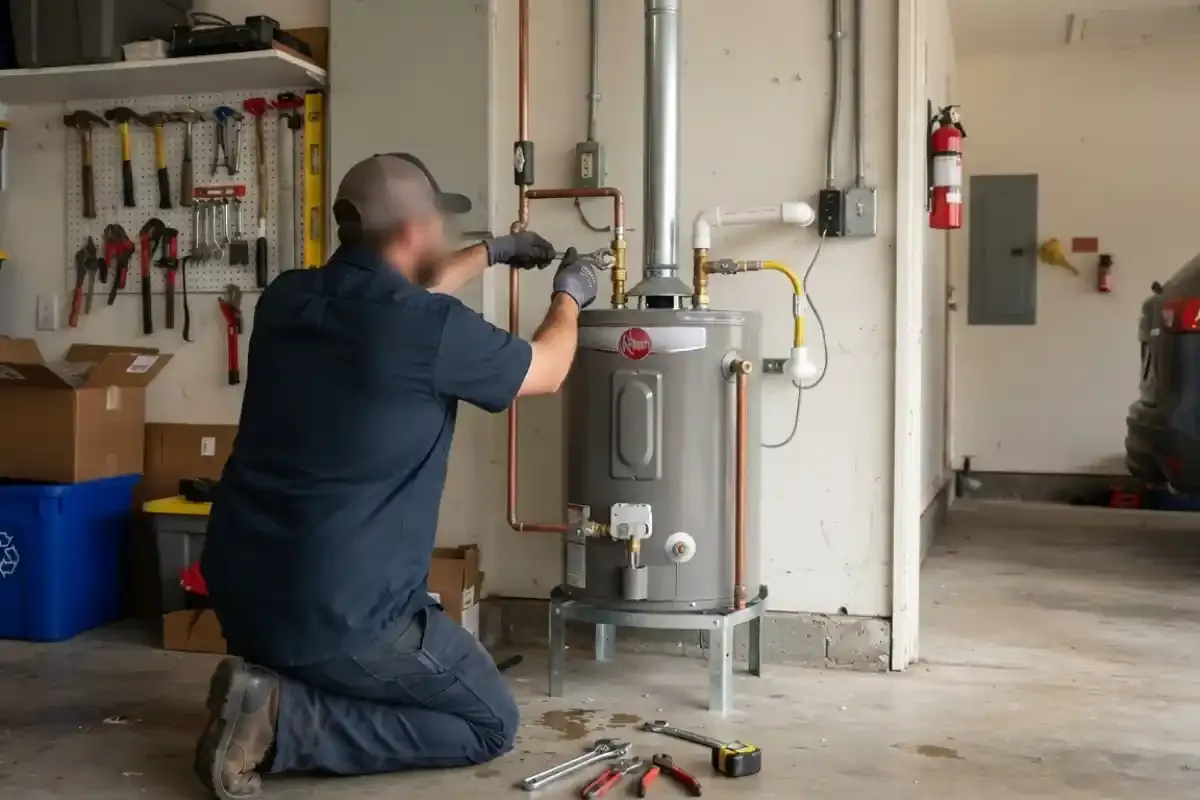
Water heater installation in Palisades Park, NJ means setting a new unit in place, connecting water and fuel or power, venting it correctly and testing it before you rely on it. Doing it on your schedule beats doing it with water on the floor. A good job starts with choosing the right unit for your home, then getting every connection right.
This page covers sizing, expansion tanks, venting, relocation, permits and moving from gas to a heat pump. Call the 24/7 line to book a visit and get a clear price before work starts.
Sizing and picking a unit
The label on a tank shows its capacity in gallons, but what matters is how fast it recovers and how much hot water your household uses at the busiest hour. A couple in a condo and a family sharing two bathrooms need different units.
We ask about showers, laundry habits and how many fixtures run at once, then match a unit to those answers. Oversizing wastes energy and floor space, and undersizing means cold showers. If you are comparing a tank against a demand-style heater, see our tankless water heater page.
What goes into a proper installation
The tank is only part of the job. These are the pieces that make it safe and reliable.
Shutoff valves
A working shutoff on the cold supply lets anyone isolate the heater in seconds during a leak.
Temperature and pressure relief valve
This safety valve opens if pressure or heat climb too high. Its discharge line must be piped to a safe location.
Flexible or rigid connectors
We choose connectors that suit the water lines and unit, using dielectric fittings where dissimilar metals meet.
Drain pan or leak control
In a finished area, a pan with a drain path limits the damage from a future leak.
Venting or electrical supply
Gas units need correct flue sizing and clearance, and electric units need a circuit that matches the manufacturer's requirements.
Need a plumber now?
Call the 24/7 line and describe the problem. We book the next available appointment.
Expansion tanks and closed systems
When a house has a check valve or pressure-reducing valve on the incoming line, heated water has nowhere to expand. Pressure climbs, which strains the tank and fixtures. An expansion tank gives that extra volume somewhere to go.
Whether you need one depends on how your system is set up, and we check that on site. If an old heater ran without one for years, the new install is a good time to look at the supply side. Our technician will test static pressure and explain what we find.
Venting, clearance and where the heater lives
Gas and some power-vent units need a path for exhaust gases. The right flue size, slope and clearance from combustibles come from the manufacturer's instructions and the local rules, so we follow those rather than guess.
Moving a heater, for example from a crowded closet to a basement wall, changes pipe runs and sometimes venting. It can be worth it for access and service, but it adds work. Tell us what you want and we will lay out what the change involves. For related work see plumbing installation.
Moving from gas to a heat pump unit
A heat pump water heater runs on electricity and pulls heat from the air, so the old gas line and flue are no longer used. It needs room for airflow, a condensate drain and a suitable electrical circuit. A basement or large utility room often works better than a small closet.
If you go this way, the gas supply must be capped properly and the old vent dealt with. We review the space, circuit and drain before suggesting it, and we tell you if a gas tank still makes more sense for your home.
Hard water and your new heater
The Veolia Water New Jersey 2025 water quality report lists hardness at 210 ppm as calcium carbonate, which it classes as very hard. That means scale and sediment form faster in heaters. A new install is the moment to add isolation valves and plan a yearly flush.
Permits, inspection and your plumber's license
Here is how the process works in the borough, based on the Palisades Park building department.
| Step | What to know |
|---|---|
| Permit | Plumbing permit fees are based on the number of fixtures or appliances |
| Inspection | Plumbing inspections run Tuesday and Thursday mornings |
| Final inspection | Final inspections must be made or penalties can be issued |
| License | Work is limited to licensed master plumbers, authorized contractors or their W-2 employees |
Permit rules vary, so ask the Palisades Park Building Department. You can ask any plumber for the license number and check it with the NJ Division of Consumer Affairs.
How a scheduled install runs
Planned work lets us do each step without rushing.
- 1
Walkthrough
We look at the space, existing lines, venting and access path, then confirm the plan and the price.
- 2
Prep and shutoff
Water and fuel or power are isolated, and the old unit is drained and removed.
- 3
Set, connect and vent
The new unit is placed, supply lines and safety devices installed, and venting or wiring completed to match the instructions.
- 4
Test and finish
We fill the tank, purge air, check for leaks, set the temperature and review shutoffs with you.
Installing in Palisades Park homes
With roughly 7,668 housing units in about 1.25 square miles, the borough mixes older houses, two-family homes and apartments. Stairs, low ceilings and shared basements affect how a heater gets in, so measuring first saves surprises on install day. We also work in Fort Lee and nearby towns.
What affects the price of installation
A planned install is easier to price than an emergency, but the details still matter.
Unit type and capacity
Tank, heat pump and tankless models differ in equipment and labor.
Fuel, venting and electrical
New venting, gas line changes or a new circuit add work.
Location changes
Relocating the heater changes pipe runs and may change venting.
Supporting parts
Expansion tanks, shutoffs, drain pans and connectors vary by home.
Permit fees
The borough bases plumbing permit fees on the number of fixtures or appliances.
Planned replacements are normally not an insurance claim, though sudden damage may be. We cannot say your exact cost before seeing the job. Want your real number? Call the 24/7 line.
Common Questions
A straightforward swap of like for like is usually done in a single visit. Moving the heater, changing fuel or adding venting takes longer. We explain the plan at the walkthrough so you know what to expect.
It depends on whether your supply is a closed system, for example with a check valve or pressure-reducing valve. We test the pressure and look at the piping before recommending one.
Often yes. Relocation changes pipe lengths, venting and sometimes electrical work. We review the new location for clearance and access, then give a clear price before work starts.
Permit fees at the borough are based on the number of fixtures or appliances, and plumbing inspections are held Tuesday and Thursday mornings. Rules vary, so ask the Palisades Park Building Department.
In many homes you can, provided there is airflow, a condensate drain and adequate electrical capacity. We check each before suggesting it, and we cap the old gas connection properly.
Veolia lists hardness at 210 ppm as calcium carbonate, which it calls very hard, so sediment and scale form faster. Regular flushing and anode rod checks help. We do not promise a lifespan.
Yes. Landlords and property managers can call the 24/7 line to schedule, and we coordinate tenant access. Same-day appointments are available when schedules allow.
Licensing and permits
Under New Jersey plumbing licensing standards, plumbing work is limited to licensed master plumbers, authorized plumbing contractors and their employees. You can check any plumber through the NJ Division of Consumer Affairs, State Board of Examiners of Master Plumbers. Palisades Park also publishes permit and inspection details on the borough website.