When the toilet, tub and floor drain all back up at once, the main sewer line is almost always blocked, and that cannot wait. Our 24/7 emergency dispatch covers sewer line cleaning in Palisades Park, NJ. Until we arrive, stop using water, keep the lowest drain area clear of people and pets, and keep your distance from any wet outlet or appliance.
Sewer line cleaning clears the large pipe that carries all household waste from your building to the street. It uses a heavy cable machine, a high-pressure jetter, or both, and usually starts at the cleanout.
Find your cleanout before we arrive
A cleanout is a capped pipe, usually 3 or 4 inches wide, that gives direct access to the main line. Common places are a basement floor near the foundation wall, a crawl space, a utility area, or outside near the house. It often has a square or round cap that can be unscrewed with a wrench.
Do not open a cleanout under pressure. If water is standing in the pipe, the cap can release a rush of waste. Just tell us where it is, and we will open it safely with the right gear. If you cannot find one, we can often work through a toilet instead.
Main sewer line clog emergency: what to do first
A blocked main is a sanitation issue, so protecting people and property comes before cleaning.
- 1
Stop all water use
Flushes, showers, laundry and dishwashers all send more water toward the blockage.
- 2
Move belongings off the floor
Basement items, rugs and stored boxes near the floor drain are the first to be damaged.
- 3
Stay clear of wet electrical areas
If a panel, outlet or furnace is near standing water, do not enter.
- 4
Call the 24/7 line
Describe which drains are backing up. We can often arrange same-day appointments when available, and after-hours dispatch if the backup is active.
Need a plumber now?
Call the 24/7 line and describe the problem. We book the next available appointment.
Signs the main line is the problem
A clog in a single sink is local. These patterns point to the main.
Multiple fixtures back up together
A toilet flush that makes the tub gurgle means water is looking for another way out.
Basement floor drain overflows first
The lowest drain in the house is usually the first to show a main line blockage.
Gurgling from the toilet
Air trapped by a blockage escapes through the nearest water seal.
Sewage odor
A strong smell near the floor drain or cleanout suggests the line is full.
Repeat backups
If the line clears and fails again within weeks, something in the pipe is feeding the problem.
How we clear a main sewer line
We usually open the cleanout, feed a heavy cable with a cutting head, and work back and forth until water runs freely. Then we flush the line to confirm flow. For stubborn or recurring blockages we move to hydro jetting, which cleans the pipe wall with high-pressure water.
Our drain cleaning work covers fixture lines, while sewer line cleaning covers the large pipe that all those lines join. If a branch is the only problem, you do not need a main line job, and we say so.
Tree roots in the sewer line
Roots look for moisture and enter through tiny gaps at joints. Once inside, they grow into a mat that catches paper and waste. A cable with a cutting head clears them, but roots grow back if the opening stays. If the camera shows repeated entry at one joint, a spot repair may be a better long-term answer than cleaning again.
What the camera adds after cleaning
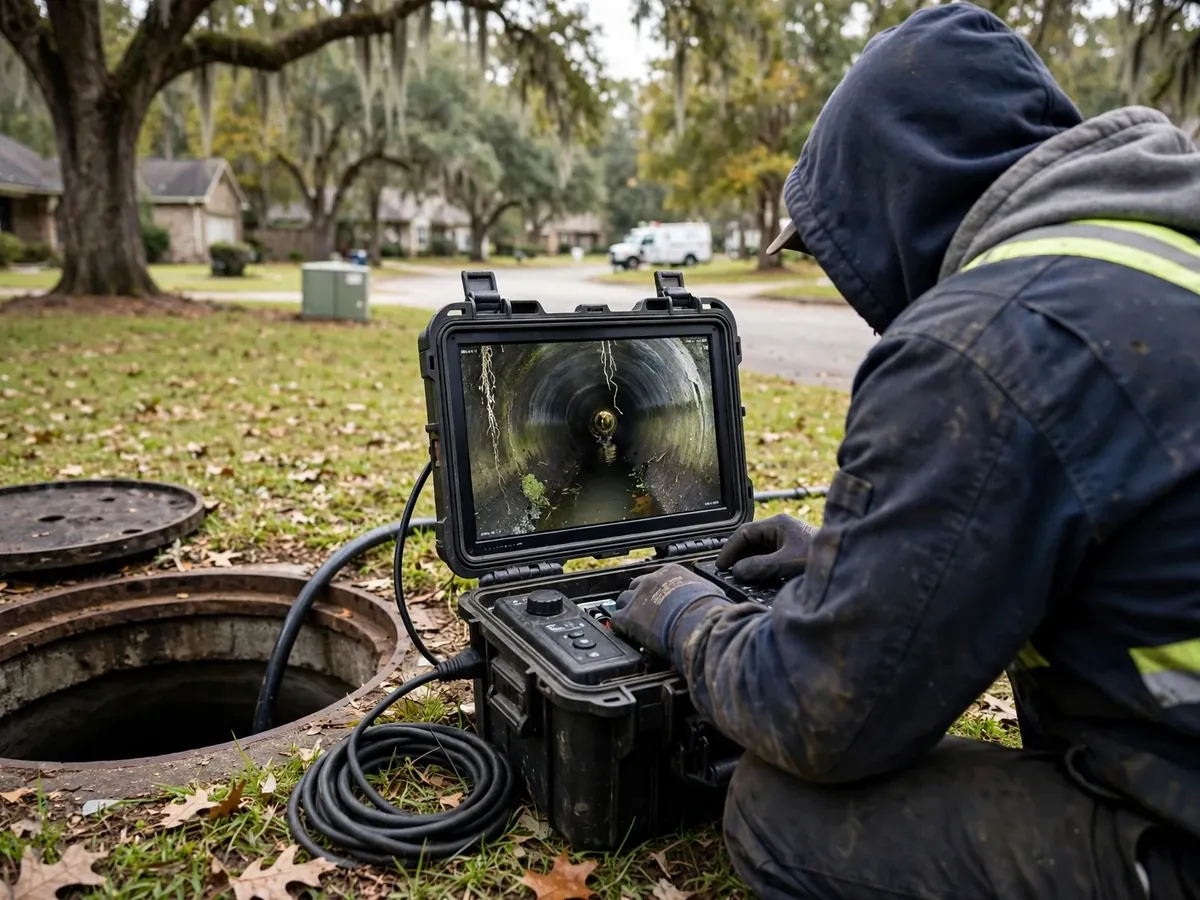
Clearing a clog fixes the symptom, but it does not tell you why the line blocked. A camera run after cleaning shows whether the pipe is sound, whether roots are present, and whether the line sags. Our sewer camera inspection page explains what you receive.
If the footage shows damage, the next step is sewer line repair. If the pipe looks clean, we help you understand what to avoid sending down the drain.
How often a main line needs cleaning
There is no single schedule. This table shows typical patterns.
| Pattern | What it suggests | Typical approach |
|---|---|---|
| One backup, never again | Isolated blockage | Clear it and move on |
| Backup every year or two | Slow buildup or roots | Plan a periodic cleaning |
| Backup every few months | Defect or heavy root entry | Camera, then repair or jetting |
| Backup after heavy use | Sag or undersized line | Camera and a conversation about options |
| No problems, older line | Unknown condition | Optional camera check |
Our blog covers how often to clean a sewer line in more detail, but the right interval depends on your pipe.
Wipes, grease and what not to flush
Wipes labeled flushable do not break down like toilet paper. They collect in the main line and bind with grease and roots. Cooking fat, coffee grounds and feminine products also cause blockages. Only toilet paper and waste should go down a toilet, and fats should go in the trash.
In multi-unit buildings, one tenant's habits can block the line for everyone. Landlords and property managers should post a simple notice, and they can call the 24/7 line for after-hours backups.
What affects the price of sewer line cleaning
Main line cleaning varies with the line and the clog. You get a clear price before work starts.
Cleanout access
An accessible cleanout speeds setup. Working through a toilet takes longer.
Distance to the blockage
A clog far down the line needs more cable and time.
Type of blockage
Paper and grease are simpler than packed roots or objects.
Cable or jetting
Jetting uses different equipment and often takes more time than a simple cable pass.
Time of the call
Nights and weekends can cost more than a scheduled daytime visit.
Insurance rarely covers routine line cleaning, but some policies cover sudden backup damage, so check yours. We cannot say your exact cost before seeing the job. Want your real number? Call the 24/7 line.
Common Questions
Yes. Our emergency dispatch runs 24/7 including nights, weekends and holidays. Call the 24/7 line and tell us which drains are backing up. We will give you steps to follow while a crew heads out, though we cannot promise an exact arrival time.
If only one fixture is slow, the problem is local. If several fixtures back up together, or the lowest floor drain overflows, the main line is the likely source.
Look for a capped pipe near the foundation, in a basement or utility area, or outside near the house. If you cannot find it, describe your layout and we will help.
Not always. A one-time blockage may stay gone. Roots, a sag or a broken joint will bring the clog back, and a camera helps tell which.
Rental machines exist, but a main line cable is powerful and can injure you or damage the pipe. We recommend letting a licensed plumber handle it.
Post a clear notice and keep our visit report on file. We note what we find in the line, which gives you a record if you need to discuss responsibility under your lease.
Licensing and permits
Under New Jersey plumbing licensing standards, plumbing work is limited to licensed master plumbers, authorized plumbing contractors and their employees. You can check any plumber through the NJ Division of Consumer Affairs, State Board of Examiners of Master Plumbers. Palisades Park also publishes permit and inspection details on the borough website.