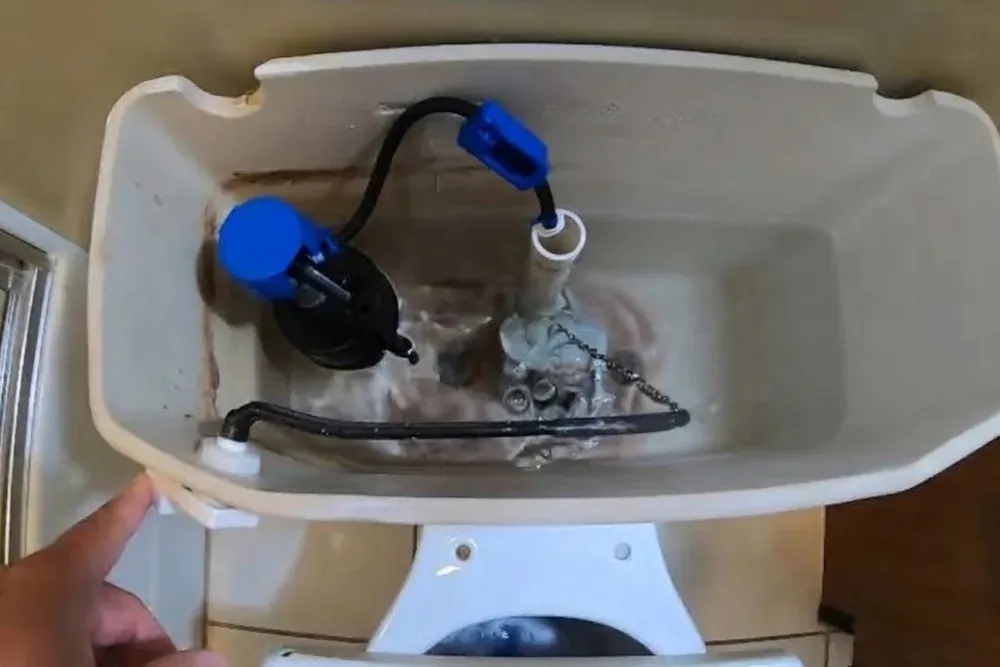
A toilet that overflows or leaks onto the bathroom floor needs attention right away, and in Palisades Park, NJ you can reach us any hour. Emergency toilet repair means stopping the water, finding the failed part and fixing it so the fixture flushes and seals again. Our 24/7 emergency dispatch covers nights and weekends.
While you wait, turn the small valve behind the toilet clockwise to stop the supply, lift the tank lid and set the float up if water is still rising, and keep towels at the base. Do not keep flushing.
Toilet overflowing: what to do first
An overflow gets worse fast. Follow these steps until help arrives.
- 1
Stop the refill
Reach behind the bowl and turn the supply valve clockwise. If it does not move, lift the flapper in the tank or prop up the float to stop the fill.
- 2
Do not flush again
Another flush adds more water to a bowl that cannot drain.
- 3
Contain the water
Use towels at the base and keep outlets, cords and power strips away from the wet floor.
- 4
Check other drains
If sinks or tubs gurgle or back up as well, the blockage may be in the main line and not the toilet. Call the 24/7 line and tell us.
A clogged toilet or a bigger drain problem
A single slow toilet is usually a local clog that a plunger or closet auger can reach. When the toilet clogs repeatedly, or other fixtures react when you flush, the blockage is further down the line.
We use a closet auger, which is shaped to protect the porcelain, before any drain machine. If the line itself is the issue, our drain cleaning team takes over with the right equipment. Wipes marketed as flushable, paper towels and feminine products are the usual culprits.
Need a plumber now?
Call the 24/7 line and describe the problem. We book the next available appointment.
Running toilet and tank leaks
A running toilet wastes water around the clock and often signals a worn part. These are the usual sources.
Worn flapper
A warped or mineral-coated rubber flapper lets tank water slip into the bowl, so the fill valve keeps refilling.
Failing fill valve
If water keeps running or the tank refills slowly or noisily, the fill valve is likely worn.
Float set too high
Water spilling into the overflow tube means the level is above the right line.
Loose tank bolts or gaskets
Drips at the tank-to-bowl joint come from worn rubber washers.
Cracked tank
A hairline crack that weeps cannot be sealed for good. The tank or toilet must be replaced.
Rocking toilet, wax ring and flange
A toilet seats on a wax ring that seals the bowl to the drain flange in the floor. If the toilet rocks or you see water at the base after flushing, the ring has failed or the flange is damaged. Never ignore it, since sewer gas and leaking water can reach the subfloor.
We lift the toilet, inspect the flange for cracks or a wrong height, replace the wax or gasket and reset the fixture. A flange that has rusted or broken needs a repair ring or replacement before the toilet goes back on. If the floor is soft, tell us.
What we check and how we decide
Different symptoms point to different parts, and often the fix is small.
| Symptom | Likely cause | Typical fix |
|---|---|---|
| Water running into bowl | Flapper or flush valve seat | Replace flapper or seal |
| Slow refill or noise | Fill valve | Replace fill valve |
| Water at base | Wax ring or supply line | Reset toilet, new wax, new line |
| Weak flush | Partial clog or blocked rim jets | Auger and clean ports |
| Cracked porcelain | Impact or age | Replace toilet |
Supply valves that will not shut off
The small stop valve behind the toilet is what stops an emergency. If it is stuck, leaks around the stem or will not close fully, it should be replaced. Old multi-turn valves can seize because mineral scale builds up inside.
The Veolia Water New Jersey 2025 report lists hardness at 210 ppm as calcium carbonate, which it calls very hard. Scale can coat flappers, fill valves and stop valves, so these parts may wear and stick sooner than in softer water areas. We do not give lifespan numbers, but a worn stop valve is cheap to change before a leak forces the issue.
Toilet installation and replacement
A planned swap is straightforward when the flange and floor are sound. We remove the old toilet, set a new wax ring or gasket, level the fixture, connect a new supply line and test the flush. Rough-in distance, bowl shape and seat height matter, so measure or let us check.
For larger bathroom work, see plumbing installation. In an older Palisades Park house, we often find a flange or supply that has aged beyond reuse, so we plan for a few extra parts.
Landlords, permits and local service
Palisades Park has about 7,668 housing units, many rented, so toilet calls from property managers are common. Replacing a fixture may count toward a permit, since borough fees are based on the number of fixtures, and rules vary, so ask the Palisades Park Building Department. Work must be done by a licensed master plumber or authorized contractor. We also serve Ridgefield and neighboring areas.
What affects the price of toilet work
A flapper swap and a full reset on a damaged flange are very different jobs.
Which part failed
Flappers and fill valves differ from wax rings, flanges and supply valves.
Repair or replacement
A cracked tank or bowl means a new fixture.
Floor and flange condition
A rotted subfloor or broken flange adds repairs before the toilet can be set.
Clog location
A local clog costs less to clear than a blockage in the drain line.
Time of day
After-hours dispatch may differ from a scheduled visit.
Insurance may cover sudden water damage from an overflow but not wear on the toilet. We cannot say your exact cost before seeing the job. Want your real number? Call the 24/7 line.
Common Questions
Yes. The 24/7 line connects to emergency dispatch around the clock. Overflows and leaks that cannot be stopped get priority. We cannot promise a set arrival time, but we will help you limit the water until a plumber arrives.
Usually a worn flapper, a bad fill valve or a float set too high. Mineral scale can keep a flapper from sealing. A quick tank inspection tells us which part to replace.
Look for water around the base after a flush, a toilet that rocks, or a smell of sewer gas. Once the toilet is lifted, we replace the wax ring and check the flange.
We advise against it. Chemicals sit in the bowl and can splash back on whoever works on it next. A plunger or closet auger is safer.
It is the ring on the floor that the toilet bolts to and that holds the seal against the drain. A cracked or low flange leaves the toilet loose and leaking.
Yes. A stuck or leaking stop valve is a common repair. We shut the water at the main, install a new valve and test it.
Yes. Call the 24/7 line with the address and the symptom. Same-day appointments are available when schedules allow, and we can arrange access.
Licensing and permits
Under New Jersey plumbing licensing standards, plumbing work is limited to licensed master plumbers, authorized plumbing contractors and their employees. You can check any plumber through the NJ Division of Consumer Affairs, State Board of Examiners of Master Plumbers. Palisades Park also publishes permit and inspection details on the borough website.