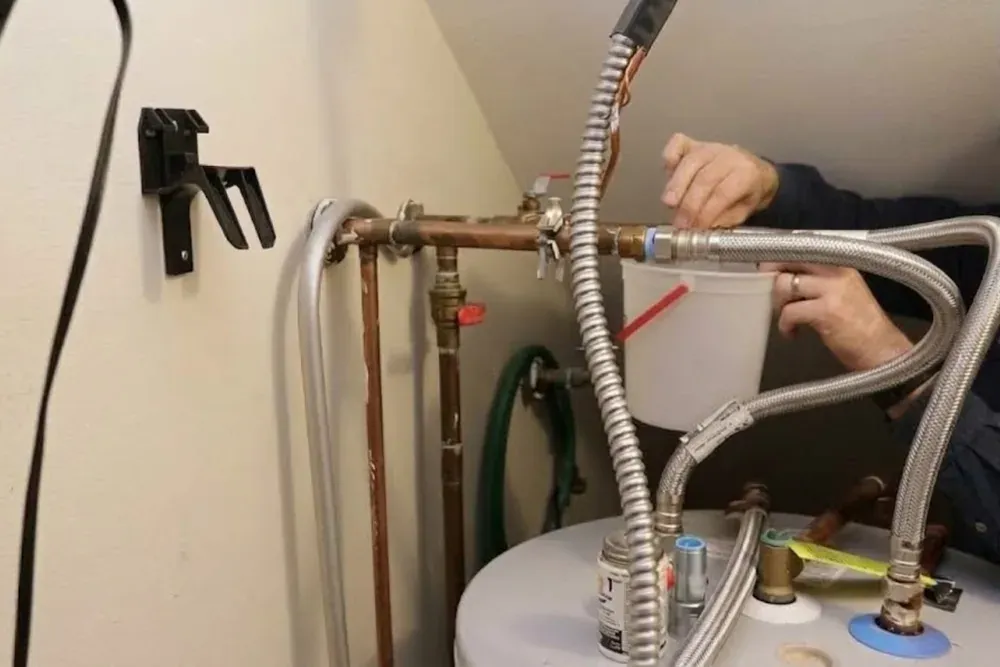
Water heater anode rod replacement in Palisades Park, NJ is worth doing when the rod is mostly eaten away, since the rod is what protects the steel tank from rusting through. It is a metal rod, usually magnesium or aluminum, that corrodes in place of the tank wall. Once it is gone, the tank itself becomes the next thing to corrode.
Very hard water adds a second problem: mineral scale and sediment that build on the bottom of the tank. Checking the rod and flushing the tank at the same visit covers both.
What an anode rod does inside the tank
A tank is steel with a glass lining, and tiny gaps in that lining expose bare steel to water. Water and steel would rust, but a more reactive metal nearby will corrode first. That is the job of the anode rod, which screws into the top of the tank and hangs in the water.
Think of it as a sacrificial part. It wears down so the tank does not. A rod that has been worn to a thin wire, or a bare steel core with chunks missing, is no longer protecting much.
Most tank warranties assume the rod is doing its job. Check your paperwork, and ask what the maker says about inspecting the rod.
How hard water changes the picture
Hard water carries dissolved calcium and magnesium. When water is heated, some of that falls out of solution as scale. It builds on the heating element in an electric tank, and on the tank floor in a gas model, where the burner sits underneath.
A scale layer on the bottom acts like insulation, so a gas burner runs longer to heat the same water. It also traps sediment that can rumble and pop as water boils beneath it. That noise is a flag to flush the tank.
Hardness affects scale more than it affects the rod. If you use a salt-based softener, water chemistry changes again, and the rod may be consumed differently. Ask a plumber to look at yours rather than assuming.
Not sure what you are looking at?
Call the 24/7 line and a dispatcher will help you decide what to do next.
Signs your anode rod needs attention
The tank will not tell you directly, so watch for these hints.
Rotten egg smell from hot water
Bacteria can react with a magnesium rod and produce sulfur odors. A different rod material can sometimes help.
Rust-colored hot water
Rust in hot water only can mean the tank interior is starting to corrode. Cold water that is also rusty points to the supply pipes.
Popping or rumbling
Sediment on the tank floor traps steam bubbles. Flush the tank and inspect the rod while you are there.
A tank that is clearly aging
If it leaks at the seam or base, the tank has failed. A rod swap will not fix that.
Anode rod options at a glance
| Rod type | Typical use | Trade-off |
|---|---|---|
| Magnesium | Standard in many tanks, strong protection | Can add to sulfur smell in some water |
| Aluminum | Common where hard water is present | Protects well, but check maker guidance on use |
| Aluminum with zinc | Used where odor is a complaint | Different cost and not for every tank |
| Powered anode | Long-term, no sacrificial metal | Needs electricity, more expensive hardware |
The right choice depends on your tank brand and water. A plumber can match the rod to your model.
How the rod is checked and replaced
It is a doable job for a handy homeowner when the rod is accessible, and a pro job when it is not.
- 1
Shut off power or gas
Turn off the breaker or set the gas control to pilot or off. Close the cold water supply.
- 2
Drain a few gallons
Open a hot tap upstairs and drain enough to take pressure off the top of the tank. Use a hose to a safe drain.
- 3
Loosen the rod
Most rods use a large hex head, and many are stuck. Use a breaker bar or impact tool, and never twist the tank.
- 4
Pull and inspect
A rod with most of its coating gone, or with the core wire showing, should be replaced.
- 5
Replace and refill
Wrap the new threads with plumber's tape, install the rod, refill the tank, and check for leaks before restoring power.
When a new rod is not the answer
If the tank is already weeping or rusted, no rod will save it. At that point, water heater replacement is a better use of money than another repair.
If the tank is sound but the rod, flush, or relief valve need work, water heater repair is a better fit. Call the 24/7 line and tell dispatch what the tank looks like and how old it is.
Palisades Park water: very hard, not corrosive
Veolia's 2025 report lists hardness at 210 ppm as calcium carbonate, above the 180 mg/L line where water is called very hard. The same report lists the water as non-corrosive, so the issue here is mostly scale and sediment rather than aggressive water eating the tank.
For homeowners in Fort Lee and Ridgefield, both served in the same Veolia advisory area in 2022, the practical takeaway is simple. Flush the tank on a schedule, listen for popping, and have the anode rod looked at during a service visit. Your tank maker's manual may suggest a specific interval.
Common Questions
Pull it and look. If it is thin, pitted, or the core wire is exposed, replace it. If it looks mostly intact, put it back. The right check interval varies by tank and water, so follow the maker's guidance.
Often yes, if the rod is easy to reach and the hex head turns with a breaker bar. If the rod is stuck, the tank is tight under a ceiling, or you are unsure, call a plumber. Forcing it can damage the tank.
Sometimes. A sulfur smell can come from bacteria reacting with the magnesium rod, and switching rod material may reduce it. A flush and a heat setting check are also worth doing.
Hard water speeds sediment and scale, which strain the tank and the heating parts. Flushing the tank and checking the rod are the practical steps. We cannot judge a tank without seeing it.
Yes. Veolia's 2025 water quality report for the Hackensack system lists a highest detected hardness of 210 ppm, which is very hard. That makes tank flushing and rod checks more useful here than in soft-water areas.
If the tank is leaking or rusted through, replace the heater. If the tank is sound but the rod is nearly gone, a new rod is a reasonable maintenance step. A plumber can tell you by looking.
Licensing and permits
Under New Jersey plumbing licensing standards, plumbing work is limited to licensed master plumbers, authorized plumbing contractors and their employees. You can check any plumber through the NJ Division of Consumer Affairs, State Board of Examiners of Master Plumbers. Palisades Park also publishes permit and inspection details on the borough website.