How often should you have your sewer line cleaned in Palisades Park, NJ? If the line has never given trouble, you may not need a routine cleaning at all, only a camera look when you buy a home or see warning signs. If it has backed up before, a cleaning every year or two is a common starting point, adjusted by what the camera shows.
The reason is simple. Sewer lines clog from grease, roots, flushed wipes, and sags in old pipe. A schedule should match the cause, not a calendar.
Match the schedule to your risk
Use this as a conversation starter with a licensed plumber. It is a guide and not a rule.
| Your situation | Reasonable approach | Why |
|---|---|---|
| No backups, newer pipe, few trees | Camera check if you buy or see signs | Little to gain from routine cleaning |
| One past backup, cause unknown | Camera inspection, then decide | Find the cause before repeating a cleaning |
| Roots found in the line | Cleaning every year or two, or repair | Roots regrow in the same spot |
| Heavy kitchen use or grease | Cleaning on a schedule, plus habit changes | Grease rebuilds fast |
| Older pipe with sags or breaks | Spot repair or lining first | Cleaning will not fix a belly in the pipe |
Signs the line needs attention now
Do not wait for a calendar date if you see any of these.
If you are unsure, stop using water and call the 24/7 line to describe what you see.
Several drains slow at once
One slow sink is a local clog. A slow tub, toilet, and washer drain point to the main line.
Gurgling from other fixtures
Flushing a toilet and hearing the shower drain gurgle means air and water are pushing back.
Sewage smell indoors or outside
A smell near a floor drain, basement, or the cleanout cap is a warning.
Water backing up in the lowest drain
Water follows gravity. A basement floor drain or tub is where a blocked main shows first.
Wet or greener patch in the yard
A lush spot over the line can mean a leak. Call a plumber and stop using water.
Not sure what you are looking at?
Call the 24/7 line and a dispatcher will help you decide what to do next.
What actually causes a main line to clog
Roots find joints in older pipe and grow inside, slowly closing the opening. Grease coats the walls and traps paper and wipes. A pipe that has sagged holds a pool of water that never drains, and solids settle in it.
Cleaning clears the line, but the cause stays unless it is fixed. Cutting roots gives the line a few months or years, depending on how fast they regrow. Jetting removes grease but cannot straighten a sag.
That is why a camera comes first. It shows what is in the pipe and decides whether cleaning, repair, or relining is the right next step.
Keep notes on every backup: the date, which drains were affected, and what the plumber found. A short log lets the next technician see whether the cause is repeating, and it helps you decide whether a routine cleaning is paying off or whether a repair would end the cycle for good.
Cable, jet, or camera: what each is for
A plumber may use these in sequence.
- 1
Locate the cleanout
Find the access cap near the house, basement, or yard. Having it uncovered saves time.
- 2
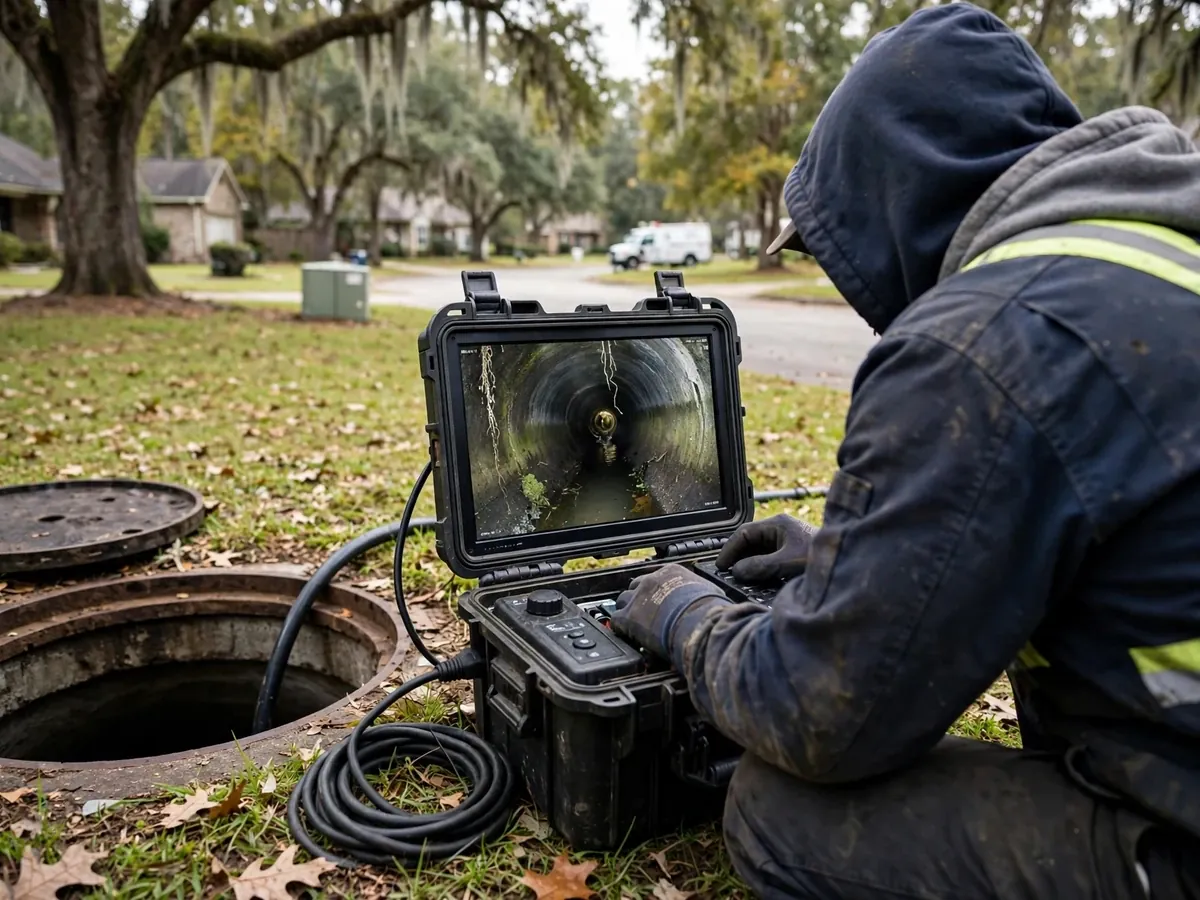
Run the camera
A small waterproof camera on a flexible line shows roots, grease, cracks, and sags, and often records a clip.
- 3
Choose the method
A cable machine cuts roots and breaks clogs. High-pressure water scours grease and scale from the pipe wall.
- 4
Check again afterward
A second camera pass confirms the line is open and shows if repairs are needed.
- 5
Plan the next step
Ask the plumber for a follow-up date only if the camera suggests a reason for one.
Habits that stretch the time between cleanings
Keep grease out of the sink, flush only toilet paper, and do not plant willows or other thirsty trees near the line. These habits do more than any schedule.
If the line clogs, call for sewer line cleaning. If you want to know what is in the pipe, a sewer camera inspection shows it.
Know where your cleanout is and keep the area around it clear of storage, so a plumber can reach it without moving boxes.
Ridgefield Park's combined sewers, a neighboring context
Palisades Park borders Ridgefield Park, which is a village with a combined sewer system. Its own materials describe six combined sewer outfalls, four to the Hackensack River and two to Overpeck Creek, with flow carried to the Bergen County Utilities Authority plant in Little Ferry, which has limited capacity. In heavy rain, the system can overflow.
Palisades Park is not described that way here, so do not assume your own sewer behaves the same. The takeaway is for homes in Ridgefield Park, and nearby Ridgefield, where a basement drain that backs up in a storm may be a municipal capacity issue, not a clog. Ask a plumber to tell the two apart before paying for a cleaning that will not help.
Common Questions
Not necessarily. If you have never had a backup and the pipe is sound, you may not need a routine cleaning. If roots or grease have been found before, every year or two is a common interval. A camera tells you more.
Repeated slow drains, gurgling, and backups that return after clearing are typical signs. Only a camera confirms roots. Cutting them early can prevent a bigger repair.
Usually yes. It shows the condition of a buried pipe you cannot see otherwise. A report and a recording help you negotiate or plan repairs. Ask the plumber what the recording will show.
They rarely reach the problem and can harm older pipe. They can also leave a hazard for the plumber. Mechanical cleaning is the safer route.
Your house line is separate from the village pipe. In nearby Ridgefield Park, heavy rain can overload combined sewers. If your basement drains back up in a storm, ask a plumber whether a backwater valve makes sense.
Stop using water, keep people and pets out of the wet area, and avoid touching the water. Turn off power to wet areas only if you can do so safely, then call the 24/7 line.
Licensing and permits
Under New Jersey plumbing licensing standards, plumbing work is limited to licensed master plumbers, authorized plumbing contractors and their employees. You can check any plumber through the NJ Division of Consumer Affairs, State Board of Examiners of Master Plumbers. Palisades Park also publishes permit and inspection details on the borough website.