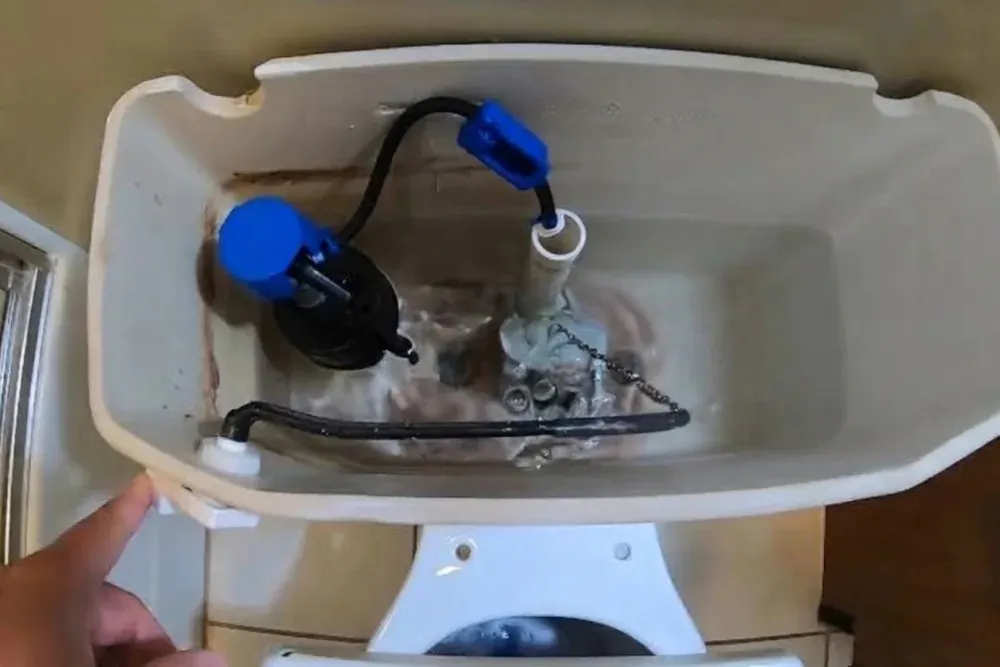
To install a toilet gasket, you shut off the water, drain the toilet, unbolt and lift it off the flange, scrape off the old wax ring, set a new gasket on the flange or the toilet horn, and press the toilet straight down. Then you bolt it, reconnect the supply, and test for leaks.
This Palisades Park, NJ guide covers the signs of a failed gasket, the tools, the steps, and the points where it makes sense to hand the job to a plumber.
Signs the gasket has failed
The gasket, usually a wax ring, seals the toilet to the drain flange. When it fails, water or gas escapes at the floor.
Water around the base
Moisture after flushing, not from the tank or supply line, points to the seal.
A rocking toilet
A loose toilet can break the seal even with a good ring.
Sewer smell near the toilet
Gas escaping past the ring. Check traps in other drains too.
Soft or stained flooring
Slow leaks soak the subfloor. Press on the area with a screwdriver tip to feel for soft wood.
Water stain on the ceiling below
If the toilet is on an upper floor, a seal leak can show up downstairs.
Rule out the easy causes first
Wipe the tank, supply line, and base dry, then watch for the first drip. A sweating tank, a loose supply nut, or a leaking shutoff can look like a base leak. Check these before you pull the toilet.
If you are unsure where the water starts, our leak detection service can track a hidden source, which matters when water has reached a ceiling or wall.
Not sure what you are looking at?
Call the 24/7 line and a dispatcher will help you decide what to do next.
Tools and materials
Gather these before you shut the water off.
| Item | Why you need it |
|---|---|
| New wax ring or wax-free gasket | The seal itself. Match it to your drain and toilet |
| New closet bolts and washers | Old ones are often corroded |
| Adjustable wrench and screwdriver | For nuts, the tank, and caps |
| Putty knife | To scrape old wax from the flange |
| Rubber gloves and rags | Clean-up and sanitary protection |
| Bucket and sponge | To drain the tank and bowl |
| Rag or plug | To block the drain opening during the swap |
| A helper | Toilets are heavy and awkward |
A wax-free gasket is more forgiving of a slightly uneven flange, but follow the manufacturer's directions for either type.
Step by step: replace the gasket
Take your time. Rushing causes most repeat leaks.
- 1
Shut off the water
Turn the small valve behind the toilet clockwise. Flush to empty the tank, then sponge out what remains.
- 2
Disconnect the supply line
Loosen the nut by hand or wrench. Keep a bucket under it for the water left in the line.
- 3
Remove the toilet
Pop the caps and remove the nuts on the floor bolts. Rock the toilet gently and lift it straight up with a helper, then set it on old towels or cardboard.
- 4
Clean the flange
Scrape off old wax and stuff a rag in the opening to block sewer gas. Inspect the flange for cracks or a bent ring.
- 5
Set the new gasket
Place the ring on the flange or on the toilet horn as the instructions say. Fit new bolts upright in their slots.
- 6
Lower the toilet straight down
Line up the bolt holes, press down evenly, and avoid sliding the toilet sideways. Do not rock it after it sits.
- 7
Secure and test
Tighten nuts alternately, a little at a time, so the porcelain does not crack. Reconnect the supply, open the valve, flush several times, and check the base.
Mistakes that cause repeat leaks
Reusing an old ring, overtightening bolts, setting the toilet and then lifting it to adjust, and skipping a check of the flange all lead to leaks. A flange that sits below the finished floor or is cracked will not hold a standard ring, and needs repair first.
When to stop and call a plumber
Broken or corroded flange
The ring needs a solid surface. Flange repair is not a quick patch.
Soft or rotted floor
Wood damage must be assessed before a toilet goes back.
Shutoff valve that will not close
Forcing it can break the valve. A plumber can replace it.
Cracked toilet
Hairline cracks leak and cannot be sealed.
You cannot lift the toilet safely
A toilet is heavy and slippery. Do not risk a back injury.
If the toilet overflows or sewage appears
Stop using the toilet, close the shutoff valve, and keep children and pets away. Sewage carries bacteria, so use gloves and do not touch it barehanded. Turn off power only if the breaker is dry and reachable.
Overflow with active leaking is a job for the 24/7 line. Our toilet repair page covers resets, flange repair, and replacement, and same-day appointments are offered when available.
Neighbors and building types
Many multi-story buildings in Fort Lee and homes in Leonia share the same bathroom layout issues as Palisades Park: a toilet on an upper floor leaks onto ceilings below. If you are in a condo or rental, tell the building manager before starting, since water on a lower unit becomes a shared problem.
Hiring out a toilet reset in Palisades Park
New Jersey limits plumbing work to licensed master plumbers, authorized plumbing contractors, or their W-2 employees. The license number must appear on vehicles, invoices, and advertising, and homeowners can ask for it.
You can check a license with the NJ Division of Consumer Affairs. Ask the Palisades Park Building Department whether your repair needs a permit, since rules vary. If a wax ring swap turns into flange or pipe work, that is the point to bring in a licensed plumber.
Common Questions
Water or sewer smell at the base, a rocking toilet, or soft flooring suggest a bad seal. Rule out the tank, supply line, and shutoff first.
Yes. A used ring will not seal reliably after it has been compressed. Fit a new one each time.
Both can work. Wax is common and cheap. Wax-free gaskets tolerate slight flange differences and are reusable in some cases. Follow the maker's instructions.
Many homeowners can if the flange and floor are sound and they can lift the toilet safely. Stop if you find damage or the shutoff does not close.
Plan on a couple of hours with a helper, plus time for the area to dry. Rushing leads to repeat leaks.
Shut the toilet shutoff, dry the base, and note where water starts. Tell the landlord or manager at once, since leaks can reach units below.
Licensing and permits
Under New Jersey plumbing licensing standards, plumbing work is limited to licensed master plumbers, authorized plumbing contractors and their employees. You can check any plumber through the NJ Division of Consumer Affairs, State Board of Examiners of Master Plumbers. Palisades Park also publishes permit and inspection details on the borough website.