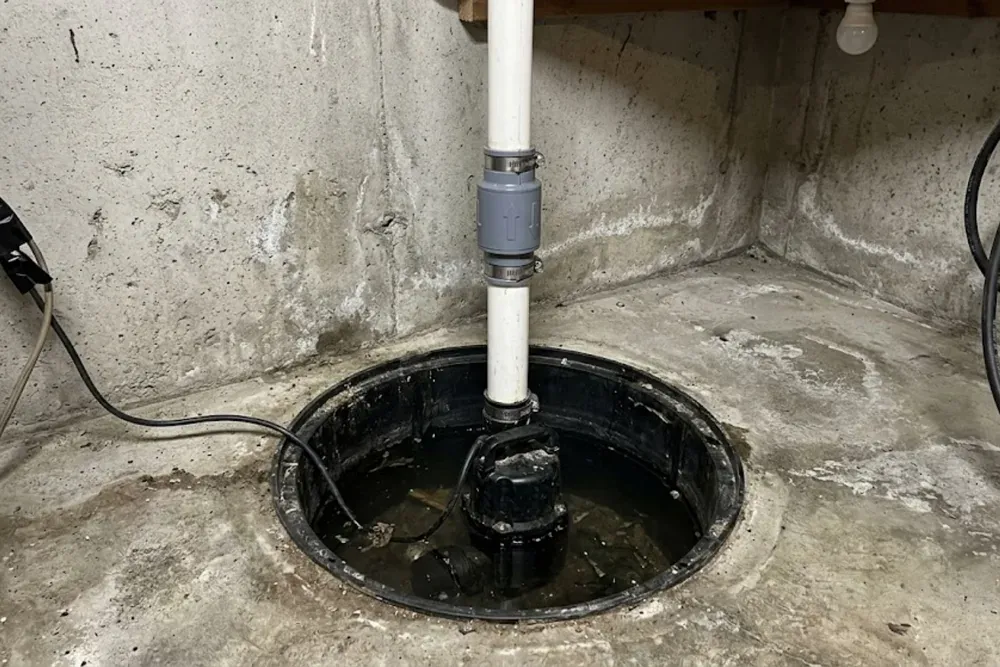
Sump pump installation cost in Palisades Park, NJ depends mainly on whether a pit already exists, the pump type and power, whether you add a battery backup, how far the water must be piped out, and how hard the floor is to cut. Swapping a pump in an existing pit is a small job. Breaking concrete to set a new pit is not.
We do not print dollar figures here because the right figure depends on your basement. This page lays out what changes the price so you can read any quote with confidence.
New pit or replacement: the biggest split
If a pit, liner, and discharge pipe are already in place, a plumber can often replace the pump and check valve without opening the floor. That work is mostly the pump itself plus labor and testing.
A first-time installation is different. The floor has to be cut, soil dug out, a liner set, and concrete patched. Cutting concrete adds dust control, cleanup, and drying time. This is why two homeowners can ask for a 'sump pump install' and receive very different proposals.
Cost factors compared
The right column shows the direction each factor pushes the total.
| Factor | What changes | Effect on cost |
|---|---|---|
| New pit versus replacement | Floor cutting, digging, liner, concrete patch | Large |
| Submersible versus pedestal pump | Submersible sits in the pit and runs quieter. Pedestal motor sits above | Moderate |
| Horsepower and flow rating | Sized to inflow and lift height | Moderate |
| Battery backup or water-powered backup | Keeps pumping in a power outage | Moderate |
| Discharge pipe length and route | Longer runs, more fittings, exterior work | Moderate |
| Check valve and alarm | Prevents backflow and warns of failure | Small |
| Permit and inspection | Plumbing work tied to the install | Small |
| Finished basement | Protecting or removing flooring and walls | Moderate |
No single row decides the total. A proper quote lists each of these in plain words.
Not sure what you are looking at?
Call the 24/7 line and a dispatcher will help you decide what to do next.
Choosing a pump type
Both styles work. The right pick depends on pit size, noise, and budget.
Submersible pump
Sits inside the pit, runs quieter, and is common in finished basements.
Pedestal pump
Motor mounts above the pit. Easier to service, but louder and more visible.
Battery backup
Takes over when power fails. Storms often cause outages at the same time as heavy runoff.
Alarm switch
Alerts you if the water level climbs too high, which helps if a pump stalls.
Check valve
Stops pumped water from flowing back into the pit. Part of any proper installation.
Where does the water go?
The discharge pipe must carry water away from the foundation, or it will cycle straight back to the pit. Routing it to a safe point on your property takes planning and sometimes extra pipe.
Do not assume water can be connected to the household sewer. Rules differ, and some combined sewer systems are overwhelmed in heavy rain. Ask us and your local building department what applies to your address before any plan is finalized.
How a pump gets installed
This is the general order of work for a new pit. Your job may skip some steps.
- 1
Evaluate the water source
We look at where water enters and whether a pump is the right answer.
- 2
Choose pit location
Usually the lowest point of the floor, with room for the lid and discharge line.
- 3
Cut and dig
The slab is opened, soil removed, and the liner set level.
- 4
Set the pump and plumb the discharge
The pump goes in with a check valve, and the pipe is run to the exterior.
- 5
Patch, test, and explain
The floor is patched, the pump is tested with water, and you are shown how to check it yourself.
Signs your current pump is failing
Strange noises, a pump that runs constantly, a pump that never turns on, rust on the housing, or a basement that gets damp after storms are all warning signs. Test your pump by pouring water into the pit until the float rises. Do not reach in while it is plugged in. If it does not start, unplug it and call for service.
Pump, drains, and waterproofing work together
A sump pump handles water that has already collected. Interior drains and sealing deal with how it enters. Many basements benefit from both, and our basement waterproofing page explains how those pieces fit.
If your pump is failing or the pit is too small, a sump pump service visit can sort out whether repair or replacement is the better route.
Nearby towns and water tables
Low-lying neighbors such as Ridgefield and Ridgefield Park often face more groundwater and sewer pressure, which affects how pumps are sized and how important a backup is. If your home in Palisades Park sits near that lower ground, mention it so we can size the system correctly.
Sump pumps in Palisades Park: geography and permits
Palisades Park borders Ridgefield, which sits about 10 feet above sea level on part of the Hackensack River flood plain, and Ridgefield Park, which operates a combined sewer system that can overflow in heavy rain. Homes near those borders may see more groundwater than homes on higher blocks, so backup power deserves a serious look.
The Palisades Park Building Department bases plumbing permit fees on the number of fixtures and appliances, and inspects on Tuesday and Thursday mornings. Permit rules vary, so ask the Building Department whether a new pump or discharge change needs one.
Common Questions
It depends on whether a pit exists, the pump type, backup power, discharge routing, and floor work. We cannot name a fair number without seeing the basement. We give a clear price before work starts.
If your basement floods during storms, a backup is worth considering because outages often happen at the same time. It adds to the price but protects when the main pump has no power.
It varies with use, water quality, and maintenance. Test it every few months and replace it if it is noisy, runs nonstop, or fails a test.
Swapping a pump in an existing pit is possible for some homeowners, but unplug power first and never work near standing water with the pump energized. New pits and discharge work should go to a licensed plumber.
Away from the foundation, to a spot where water will not return. Do not assume it can go to the sewer. Ask the Palisades Park Building Department and your plumber.
Not by rule. But lower ground and nearby flood plain mean more groundwater is possible, so sizing and backup deserve extra thought. We look at each house on its own.
Licensing and permits
Under New Jersey plumbing licensing standards, plumbing work is limited to licensed master plumbers, authorized plumbing contractors and their employees. You can check any plumber through the NJ Division of Consumer Affairs, State Board of Examiners of Master Plumbers. Palisades Park also publishes permit and inspection details on the borough website.