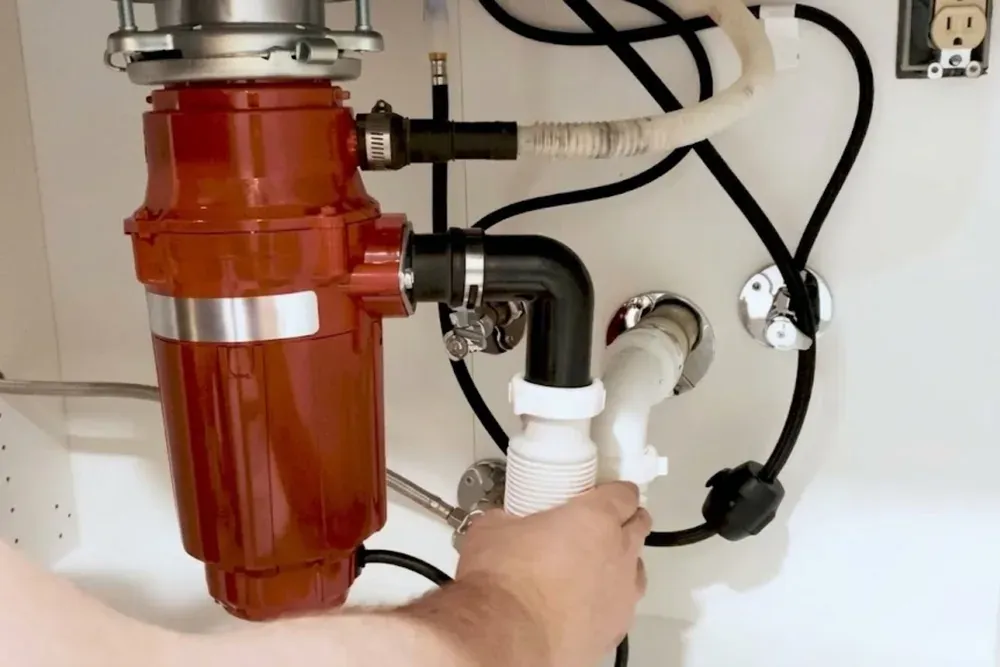
How do you prevent a clog in a toilet and a garbage disposal in Palisades Park, NJ? Flush only human waste and toilet paper, and grind only soft food scraps with cold water running. Wipes, paper towels, grease, fibrous peels, and coffee grounds cause most of the calls a plumber sees.
Neither fixture is built to be a trash can. A toilet trap is about two inches wide at its narrowest, and a disposal has a small grinding chamber with no way to shred stringy or sticky material. A few habits keep both running for years.
What never goes down the toilet
Paper that says flushable on the package still does not break down like toilet paper. Treat these as trash.
Wipes of any kind
Baby wipes, cleaning wipes, and makeup wipes hold together in the pipe and snag on rough spots, building a mat.
Paper towels and tissues
They are made to stay strong when wet, which is the opposite of what a drain line needs.
Cotton swabs and dental floss
Small, but they catch hair and paper and tie a clog together.
Feminine products and diapers
These swell with water and can wedge in the trap or the main line.
Cat litter and food
Clumping litter sets like cement in a slow section of pipe.
Disposal habits that prevent jams and clogs
A disposal chops food into small pieces. It does not dissolve grease or clear long fibers.
- 1
Run cold water first
Start the cold tap before the disposal and keep it running for about 15 seconds after. Cold keeps fats solid so they flush through instead of smearing.
- 2
Feed it slowly
Add small amounts at a time. A packed chamber jams the motor and sends big lumps down the drain.
- 3
Skip the problem foods
Potato peels, celery, corn husks, onion skins, eggshells, rice, pasta, and coffee grounds can clump or tangle.
- 4
Scrape pans into the trash
Pour cooled grease into a jar or can and throw it out. Never pour it down the sink.
- 5
Clean it monthly
Grind a handful of ice, then rinse. Wipe the splash guard with a brush and dish soap.
Not sure what you are looking at?
Call the 24/7 line and a dispatcher will help you decide what to do next.
Why clogs happen in the first place
Most toilet clogs start with too much paper in a single flush, or an object that does not break down. A low-flow toilet moves less water, so there is less force to push material along. Flush twice if you must use extra paper, or flush in stages.
Most disposal clogs come from grease and starch. Fat coats the pipe, then flour, rice, or pasta sticks to it. After a few months the drain below the disposal narrows, and the disposal hums and backs up into the sink.
If a toilet backs up and the tub or floor drain also gurgles, the blockage is in the branch or main line, not in one fixture. That is a drain-cleaning job and a camera look, and a plunger will not reach it.
Toilet and disposal problems at a glance
| Problem | Likely cause | First move |
|---|---|---|
| Toilet bowl rises slowly | Paper or wipes in the trap | Use a flange plunger, no chemicals |
| Disposal hums, does not spin | Jammed with a hard object | Power off, turn the hex key on the bottom |
| Sink backs up with disposal on | Grease and starch narrowing the pipe | Stop using water, call for cabling |
| Toilet clogs again and again | Partial blockage downstream or a flange issue | Have the line checked with a camera |
| Sewage smell around the drain | Dry trap or deeper blockage | Run water, call if the smell stays |
Never put your hand in a disposal. Switch off the wall switch and unplug it, or use the breaker, before any work.
When it is not a quick fix
A toilet that keeps clogging after plunging, or a disposal that smells and backs up each week, usually points to a line problem. Call for toilet repair when a bowl runs, leaks at the base, or rocks. Call for garbage disposal repair when the unit leaks, jams repeatedly, or trips the breaker.
If the water rises toward the rim, shut the supply valve behind the toilet and stop flushing. Keep family members out of any sewage-wet area.
Keep a plunger under each bathroom sink and a spare disposal hex key where you can find it. Knowing where they are before a clog hits saves a stressful search.
Dense housing in Palisades Park and shared lines
Palisades Park covers about 1.25 square miles and had 7,668 housing units in the 2020 census, so many homes sit close together. In a building with more than one unit, a stuck wipe or a grease plug can affect more than your own fixture.
If a toilet or disposal clog keeps coming back in a multi-unit building, report it to the landlord and tell them whether neighbors have the same trouble. Bring up both the toilet and the kitchen if you see slow drains.
The same prevention habits apply in nearby Ridgefield and Leonia. A short note taped inside the cabinet, listing what stays out of the drain, helps guests and tenants follow the rules too.
Common Questions
No. Labels are not a guarantee, because those wipes do not break apart like toilet paper. They gather in lines and pumps and are a common cause of backups. Put them in the trash.
It is better not to. Grounds are fine and settle in the trap, where they bind with grease into a sludge. Use the trash or a compost bin instead.
Use a flange plunger and push and pull with steady strokes. Hot tap water and dish soap can help soften the clog. Avoid chemical openers, since they can splash and harm the bowl and pipes.
About once a month for most kitchens. Grind ice and rinse, wipe the splash guard, and run cold water. Do it weekly if you cook with a lot of oil.
Food residue on the splash guard or a partial clog downstream is usually the cause. Clean the guard, grind citrus peel in small amounts, and if the smell persists, have the drain checked.
Check your lease and tell the landlord or property manager promptly, especially if other units are affected. A shared line backup is not something a tenant can safely fix alone.
Licensing and permits
Under New Jersey plumbing licensing standards, plumbing work is limited to licensed master plumbers, authorized plumbing contractors and their employees. You can check any plumber through the NJ Division of Consumer Affairs, State Board of Examiners of Master Plumbers. Palisades Park also publishes permit and inspection details on the borough website.